Here's a little video that shows you how to build a tribute to Mario in Minecraft. I apologize for the lack of commentary—I don't have a microphone!
Friday, December 2, 2011

Mass Effect: Interactive Cinema
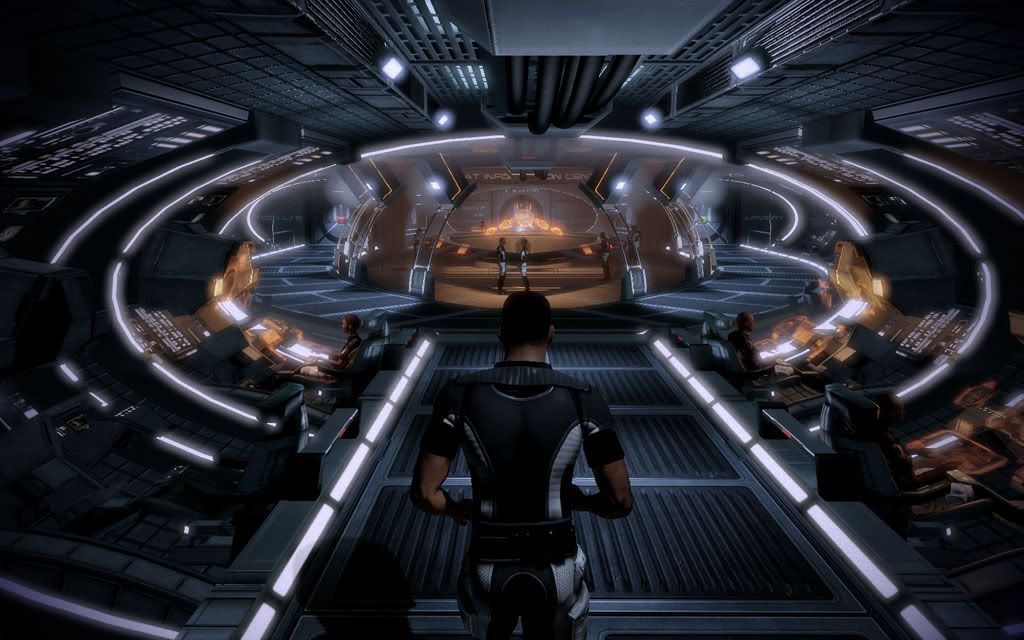
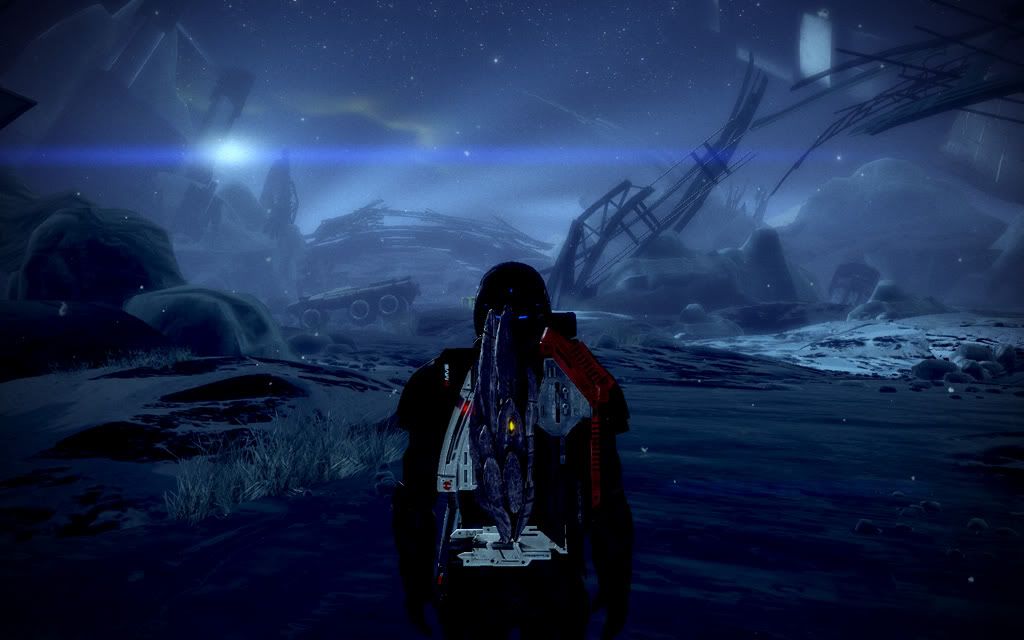
Mass Effect is one of a kind. At its heart lies fully fleshed out universe, filled with well-designed alien species, cultures, even technologies unique to the universe. Its depth and scale can rival that of Star Wars or other long-running fictional universes. That in and of itself is an incredible achievement, but it’s not all that Mass Effect has to offer.

Mass Effect 2 © 2011 EA International
In Mass Effect, you play as Commander Shepard during a time when humans have just recently made contact with a conglomerate of intelligent alien species and are attempting to gain their acceptance. It’s a very interesting take on the subject of intelligent alien life, as it deals with societal issues rather than the cliche alien invasions seen in oh so many films.
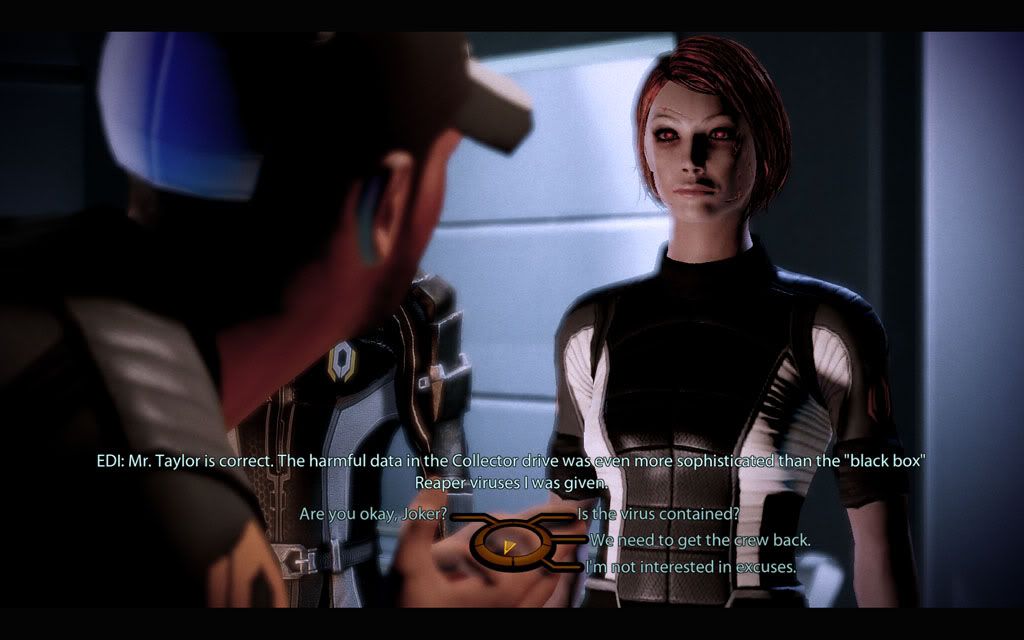
One of the best aspects of Mass Effect is its dialogue and choice system. When you think about video games, you usually don’t think of dialogue being a part of gameplay, but it is in Mass Effect. You pick what your character says, how he reacts to others, and will often be faced with choices that can change the course of the game's story.

Mass Effect 2 © 2011 EA International
When you combine Mass Effect’s incredible universe, interaction with other characters through dialogue, and choices that have real consequences, it creates a very immersive experience that just can’t be had in any other medium. Mass Effect takes the best of films and the best of games, and combines them into a work of interactive art like we’ve never seen before. It’s one of those games that could change the face of gaming forever.

Mass Effect 2 © 2011 EA International
Mass Effect 2 © 2011 EA International
In Mass Effect, you play as Commander Shepard during a time when humans have just recently made contact with a conglomerate of intelligent alien species and are attempting to gain their acceptance. It’s a very interesting take on the subject of intelligent alien life, as it deals with societal issues rather than the cliche alien invasions seen in oh so many films.
One of the best aspects of Mass Effect is its dialogue and choice system. When you think about video games, you usually don’t think of dialogue being a part of gameplay, but it is in Mass Effect. You pick what your character says, how he reacts to others, and will often be faced with choices that can change the course of the game's story.
Mass Effect 2 © 2011 EA International
When you combine Mass Effect’s incredible universe, interaction with other characters through dialogue, and choices that have real consequences, it creates a very immersive experience that just can’t be had in any other medium. Mass Effect takes the best of films and the best of games, and combines them into a work of interactive art like we’ve never seen before. It’s one of those games that could change the face of gaming forever.
Mass Effect 2 © 2011 EA International
Thursday, December 1, 2011
Minecraft: In the Eye of the Beholder...
Minecraft is a strange one. I consider it art, but it’s a very different type of art from most other games. Most games create art in the form of story and emotion-driven conflict, but Minecraft is much more… interpretive. The game is what you make of it.
In Minecraft, there are no characters. There is no story, there is no end goal, and there most definitely is no emotion-driven conflict. When you start the game, it generates a randomized blocky world, drops you in it, and says “go”. So where do you go from there?
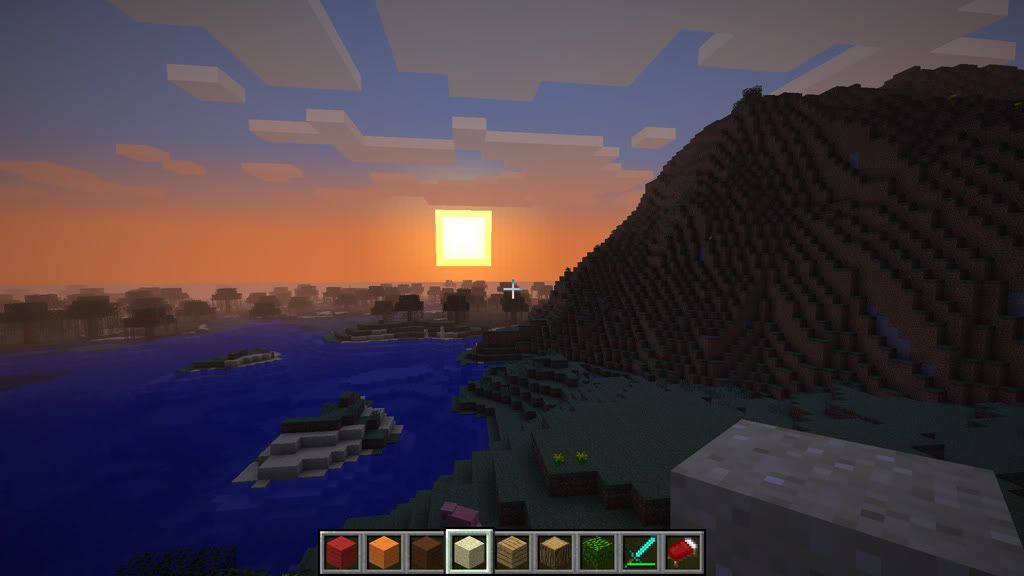
That is why Minecraft is what you make of it. You can do what you want, when you want, and how you want. The only thing you have to do in the game is stay alive, because if you don’t, you can’t play. So while you’re alive, what can you do? First and foremost, explore. While the game’s world is blocky, it can be strangely beautiful. The sun rises and sets, weather changes, and there’s plenty of wild life wandering around the world with you. It’s actually quite atmospheric.

Minecraft © Mojang 2009-2011
The most notable aspect of Minecraft is its building system. Almost every block in the world can be destroyed, and when you destroy one, you take its material and can place it back down in the world anywhere you want. This is how you create things—you mine materials, and then build things out of them.
Want to build a house? You can do that. Want to build a mansion? You can do that. Want to build an underground tunnel, a castle, a lighthouse, a river of lava, or a pyramid made of glass? You can do all that too. Minecraft is a game of freedom and creativity, which allows players to shape their experience into anything they want. This is what makes Minecraft an interactive work of art.
In Minecraft, there are no characters. There is no story, there is no end goal, and there most definitely is no emotion-driven conflict. When you start the game, it generates a randomized blocky world, drops you in it, and says “go”. So where do you go from there?
That is why Minecraft is what you make of it. You can do what you want, when you want, and how you want. The only thing you have to do in the game is stay alive, because if you don’t, you can’t play. So while you’re alive, what can you do? First and foremost, explore. While the game’s world is blocky, it can be strangely beautiful. The sun rises and sets, weather changes, and there’s plenty of wild life wandering around the world with you. It’s actually quite atmospheric.
Minecraft © Mojang 2009-2011
The most notable aspect of Minecraft is its building system. Almost every block in the world can be destroyed, and when you destroy one, you take its material and can place it back down in the world anywhere you want. This is how you create things—you mine materials, and then build things out of them.
Want to build a house? You can do that. Want to build a mansion? You can do that. Want to build an underground tunnel, a castle, a lighthouse, a river of lava, or a pyramid made of glass? You can do all that too. Minecraft is a game of freedom and creativity, which allows players to shape their experience into anything they want. This is what makes Minecraft an interactive work of art.
Friday, November 4, 2011
Another Perspective
To get another perspective on games as art, I asked my good friend Branden, who is also a gamer, to answer a few questions. He provides some interesting insight on the subject:
Jason: Do you consider games to be art? Why?
Branden: Games are definitely a form of art. Well, some are anyway. A lot of games use multiple "layers" to tell a story, i.e. Lost Odyssey, where the graphics had a look about them that melded with the musical score and the words during the "memories" that evoked emotion in the people playing the game and told the story of the main character. Some games aren't about telling a story, and are purely entertainment (most shooters).
Do you think games are widely accepted as art in today's society, or do they still have a ways to go before they reach the same status as films, music, books, etc?
Games still have a ways to go to be accepted as art by the mainstream due to the shooters (the Call of Duty series namely) that have audiences that tend to be immature, and, since they are the games that most people know about, tend to have non-gamers view all gamers in this light. As such, most people tend to not pay much attention to the games that truly are art.
What is your favorite game that you consider art, and why?
One of my favorite games that I consider art would have to be the (cliched) Final Fantasy 7. Despite graphics that made people look like basic geometric shapes glued together, and even low-quality (by today's standards) audio, the game still managed to tell an epic story, and evoke enough emotion in its audience that even 15 years after it was released, it is still one of the most talked about games of all time.
Do you think it's important for games to provide an "experience" (i.e. with characters, story, emotion), or is good gameplay enough to carry the whole game?
Personally, I think that it requires both good gameplay and a good experience to make a game a truly good game. In some cases, a good experience may even outweigh not so good gameplay.
When do you think games started to "transcend" being simple games to become art? Or do you think they've been art from the very start?
I think that games have always been a form of art, but only in the last 15-20 years have they become mainstream enough to have the financial backing to deliver a graphic experience similar to that of reading a really good book, where you get so immersed that you feel as if you are living the story.
Thanks for your time. Any extra thoughts?
Honorable mention goes to Assassins Creed games for completely taking you back in an accurate (as accurate as possible) Renaissance Italy with a very evocative story. Evocative enough that I'm spending the money to read up on the time period and even taking a trip to Italy to see the world the game represented!
_______________________________________________
Major thanks to Branden for taking the time to answer these questions!
Jason: Do you consider games to be art? Why?
Branden: Games are definitely a form of art. Well, some are anyway. A lot of games use multiple "layers" to tell a story, i.e. Lost Odyssey, where the graphics had a look about them that melded with the musical score and the words during the "memories" that evoked emotion in the people playing the game and told the story of the main character. Some games aren't about telling a story, and are purely entertainment (most shooters).
Do you think games are widely accepted as art in today's society, or do they still have a ways to go before they reach the same status as films, music, books, etc?
Games still have a ways to go to be accepted as art by the mainstream due to the shooters (the Call of Duty series namely) that have audiences that tend to be immature, and, since they are the games that most people know about, tend to have non-gamers view all gamers in this light. As such, most people tend to not pay much attention to the games that truly are art.
What is your favorite game that you consider art, and why?
One of my favorite games that I consider art would have to be the (cliched) Final Fantasy 7. Despite graphics that made people look like basic geometric shapes glued together, and even low-quality (by today's standards) audio, the game still managed to tell an epic story, and evoke enough emotion in its audience that even 15 years after it was released, it is still one of the most talked about games of all time.
Do you think it's important for games to provide an "experience" (i.e. with characters, story, emotion), or is good gameplay enough to carry the whole game?
Personally, I think that it requires both good gameplay and a good experience to make a game a truly good game. In some cases, a good experience may even outweigh not so good gameplay.
When do you think games started to "transcend" being simple games to become art? Or do you think they've been art from the very start?
I think that games have always been a form of art, but only in the last 15-20 years have they become mainstream enough to have the financial backing to deliver a graphic experience similar to that of reading a really good book, where you get so immersed that you feel as if you are living the story.
Thanks for your time. Any extra thoughts?
Honorable mention goes to Assassins Creed games for completely taking you back in an accurate (as accurate as possible) Renaissance Italy with a very evocative story. Evocative enough that I'm spending the money to read up on the time period and even taking a trip to Italy to see the world the game represented!
_______________________________________________
Major thanks to Branden for taking the time to answer these questions!
Friday, October 21, 2011
Assassin's Creed: A Journey in Art Appreciation
Assassin’s Creed is a franchise that began in 2007 and has had three game releases so far. If you asked me what was at the very heart of Assassin’s Creed, it would be art. Not just because it is so artfully crafted, but also because it’s oozing with appreciation of art done by real-world artists, primarily from the Renaissance.
The easiest place to start is Assassin’s Creed II, which takes place in Italy during the Renaissance. This in and of itself sets the stage for a game filled with art. The developers of the game created digital representations of Italian cities like Florence and Venice, taking special care in recreating these cities’ most famous and beautiful architectural works of art.
In the screenshot below, you can see the player standing on the rooftops of Florence, Italy, with the Basilica di Santa Maria del Fiore in the distance. I learned about the Basilica in an art appreciation class—how cool is it that I get to explore it while playing a video game?

© 2009 Ubisoft Entertainment
As another example, the next game in the franchise, Assassin’s Creed Brotherhood, takes place in Rome. In Brotherhood, you can explore famous structures such as the Coliseum (pictured) and the Pantheon.

© 2010 Ubisoft Entertainment
Some people may argue that Assassin’s Creed is not art, that it is simply a recreation of other people’s real art. I would argue that this game seamlessly integrates the Renaissance, and all the art that comes with it, into a fictional story, which results in a game being rich in art in so many ways that it would be silly to consider it as anything less. Not to mention that it instills a sense of art appreciation in its players, which cannot be said about practically any other game in existence. In this sense, Assassin's Creed is a franchise that is pivotal to the movement of games as art.
The easiest place to start is Assassin’s Creed II, which takes place in Italy during the Renaissance. This in and of itself sets the stage for a game filled with art. The developers of the game created digital representations of Italian cities like Florence and Venice, taking special care in recreating these cities’ most famous and beautiful architectural works of art.
In the screenshot below, you can see the player standing on the rooftops of Florence, Italy, with the Basilica di Santa Maria del Fiore in the distance. I learned about the Basilica in an art appreciation class—how cool is it that I get to explore it while playing a video game?

© 2009 Ubisoft Entertainment
As another example, the next game in the franchise, Assassin’s Creed Brotherhood, takes place in Rome. In Brotherhood, you can explore famous structures such as the Coliseum (pictured) and the Pantheon.
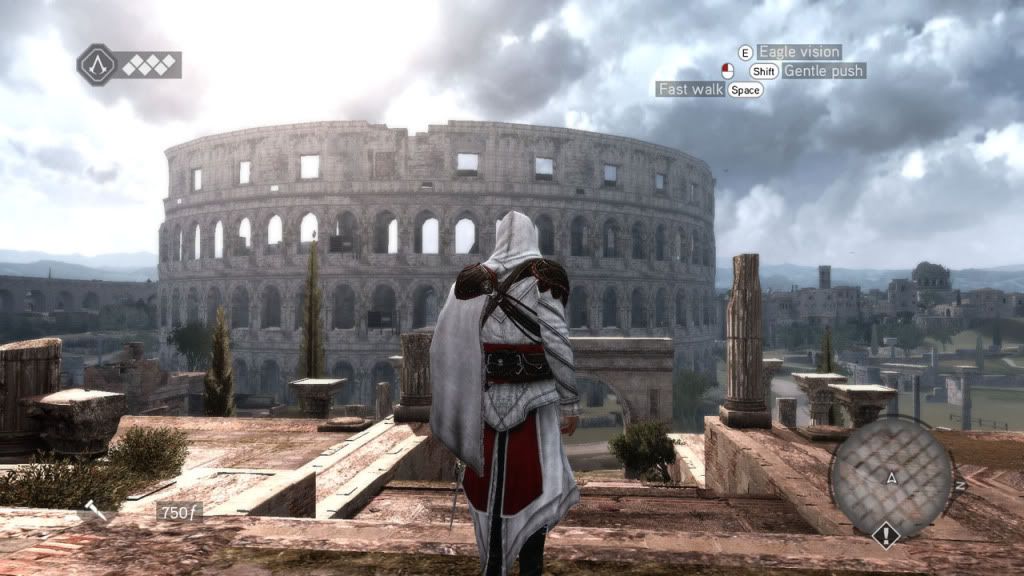
© 2010 Ubisoft Entertainment
Some people may argue that Assassin’s Creed is not art, that it is simply a recreation of other people’s real art. I would argue that this game seamlessly integrates the Renaissance, and all the art that comes with it, into a fictional story, which results in a game being rich in art in so many ways that it would be silly to consider it as anything less. Not to mention that it instills a sense of art appreciation in its players, which cannot be said about practically any other game in existence. In this sense, Assassin's Creed is a franchise that is pivotal to the movement of games as art.
The Creation of a World: Bioshock
(NOTE: I'm working on getting photos up in this blog. Sorry they aren't here yet!)
Something that is absolutely essential in works of art is the creation of a world, a place to transport the viewer/reader/player to, and to completely engross them in that place. If you look at film juggernauts like Star Wars, Lord of the Rings or James Cameron’s Avatar, this is something that they excel at. They all provide a world that you can easily lose yourself in for the duration of the film.
Have video games reached this point of world creation? Six or seven years ago, I would have said no. But today, it’s a huge, resounding YES. Take 2K Games’ Bioshock for example. Bioshock takes place in a city called Rapture. Rapture is a dark, dreary, run-down and (mostly) abandoned city that was built under water. Through windows you can see underwater vistas, with bubbles rising up from the depths. Cracks hang in the ceiling, ocean water drips into the city, and the floor has been flooded. Lights flicker and you hear the creaking of metal all around you. You begin to wonder just how safe this city is. It’s all very claustrophobic and engrossing.
Now, the physical representation of a world is not the only thing that’s needed for someone to become fully engrossed. It has to be psychological as well. Rapture is a place where people can alter their genetics to become stronger, faster, and smarter. It may sound silly, but it’s actually quite chilling to explore a world where its inhabitants freely altered their genetics, losing their humanity in the process. Rapture’s society has destroyed itself through their genetic mutations—people have gone mad, become addicted to the genetic drugs, and killed each other. The inhabitants left in the city can hardly be considered humans.
As you explore the city, you come to understand the previous population’s political views and societal values, you become familiar with its celebrities and icons, what they did for recreation, and eventually how the society began to tear itself apart. Suddenly you realize what a work of art Rapture is—an incredible world that you’ve been fortunate enough to get a glimpse into.
Something that is absolutely essential in works of art is the creation of a world, a place to transport the viewer/reader/player to, and to completely engross them in that place. If you look at film juggernauts like Star Wars, Lord of the Rings or James Cameron’s Avatar, this is something that they excel at. They all provide a world that you can easily lose yourself in for the duration of the film.
Have video games reached this point of world creation? Six or seven years ago, I would have said no. But today, it’s a huge, resounding YES. Take 2K Games’ Bioshock for example. Bioshock takes place in a city called Rapture. Rapture is a dark, dreary, run-down and (mostly) abandoned city that was built under water. Through windows you can see underwater vistas, with bubbles rising up from the depths. Cracks hang in the ceiling, ocean water drips into the city, and the floor has been flooded. Lights flicker and you hear the creaking of metal all around you. You begin to wonder just how safe this city is. It’s all very claustrophobic and engrossing.
Now, the physical representation of a world is not the only thing that’s needed for someone to become fully engrossed. It has to be psychological as well. Rapture is a place where people can alter their genetics to become stronger, faster, and smarter. It may sound silly, but it’s actually quite chilling to explore a world where its inhabitants freely altered their genetics, losing their humanity in the process. Rapture’s society has destroyed itself through their genetic mutations—people have gone mad, become addicted to the genetic drugs, and killed each other. The inhabitants left in the city can hardly be considered humans.
As you explore the city, you come to understand the previous population’s political views and societal values, you become familiar with its celebrities and icons, what they did for recreation, and eventually how the society began to tear itself apart. Suddenly you realize what a work of art Rapture is—an incredible world that you’ve been fortunate enough to get a glimpse into.
Friday, October 14, 2011
Rage: The Interactive Painting
Before I can talk about the significance of id Software’s new game, Rage, I have to explain a little bit about how video game worlds are created. You can separate the visual aspect of a game’s world into two categories. There’s the 3D models, which make up the shape and physical boundaries of a game’s environment, then there’s the textures, which add color and patterns to the surface of those 3D models. Without a texture, a 3D model would simply have a flat, solid color on its surface.
Imagine you want to create a brick wall in a video game that’s 30 feet wide and 15 feet tall. The standard procedure for this would be to create a 3D model of a flat, 30x15 surface, and then create a brick texture that would tile seamlessly across the whole surface. This means you would have a relatively small section of bricks (maybe 5x5 feet in size) that noticeably repeats several times across the 30x15 surface.
This is all changed with Rage. In Rage, id Software created a technology that allowed every square inch of the environment to be hand painted (see Hot Hardware's article from earlier this year: "Rage: The Tech Behind Id Tech 5"). That 30x15 brick wall would no longer have a hum-drum, tiled texture. The game’s artists could uniquely paint every single brick. This allowed the artists to add imperfections and a level of character to their work that was previously only seen in paintings and drawings. This is why I call Rage the interactive painting. The amount of detail and character that the artists crammed into this game is astounding. At any given point, you could stop what you’re doing, snap a picture, and hang it up on your wall.

Rage © 2011 id Software LLC

Rage © 2011 id Software LLC

Rage © 2011 id Software LLC
With visual art that’s comparable to what artists can create with paint and canvas, who could say a game like Rage isn’t art? And the best part is this is only one aspect of the game! There are plenty more reasons why this game is art, but they'll have to wait for another blog post!
Imagine you want to create a brick wall in a video game that’s 30 feet wide and 15 feet tall. The standard procedure for this would be to create a 3D model of a flat, 30x15 surface, and then create a brick texture that would tile seamlessly across the whole surface. This means you would have a relatively small section of bricks (maybe 5x5 feet in size) that noticeably repeats several times across the 30x15 surface.
This is all changed with Rage. In Rage, id Software created a technology that allowed every square inch of the environment to be hand painted (see Hot Hardware's article from earlier this year: "Rage: The Tech Behind Id Tech 5"). That 30x15 brick wall would no longer have a hum-drum, tiled texture. The game’s artists could uniquely paint every single brick. This allowed the artists to add imperfections and a level of character to their work that was previously only seen in paintings and drawings. This is why I call Rage the interactive painting. The amount of detail and character that the artists crammed into this game is astounding. At any given point, you could stop what you’re doing, snap a picture, and hang it up on your wall.

Rage © 2011 id Software LLC
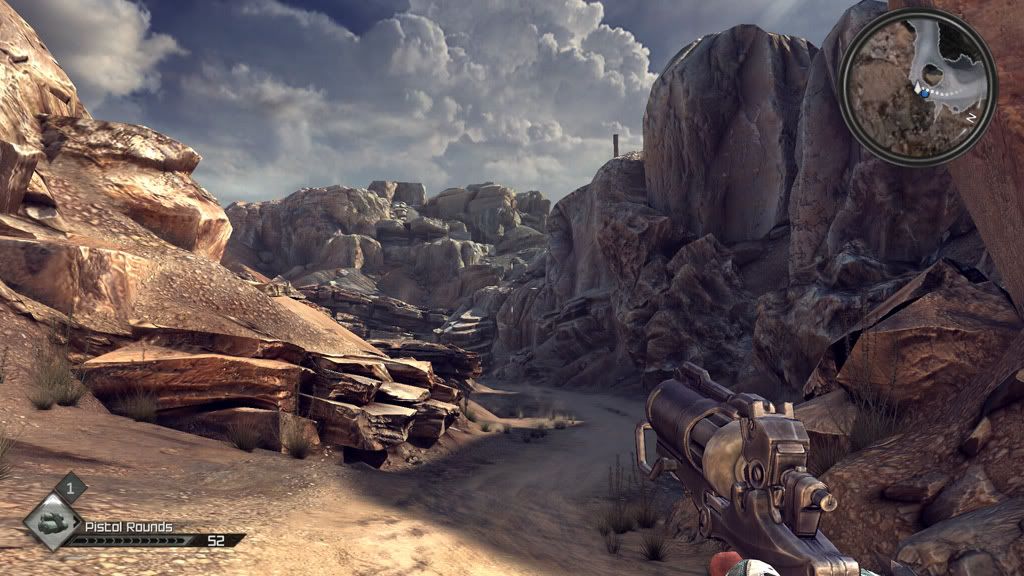
Rage © 2011 id Software LLC
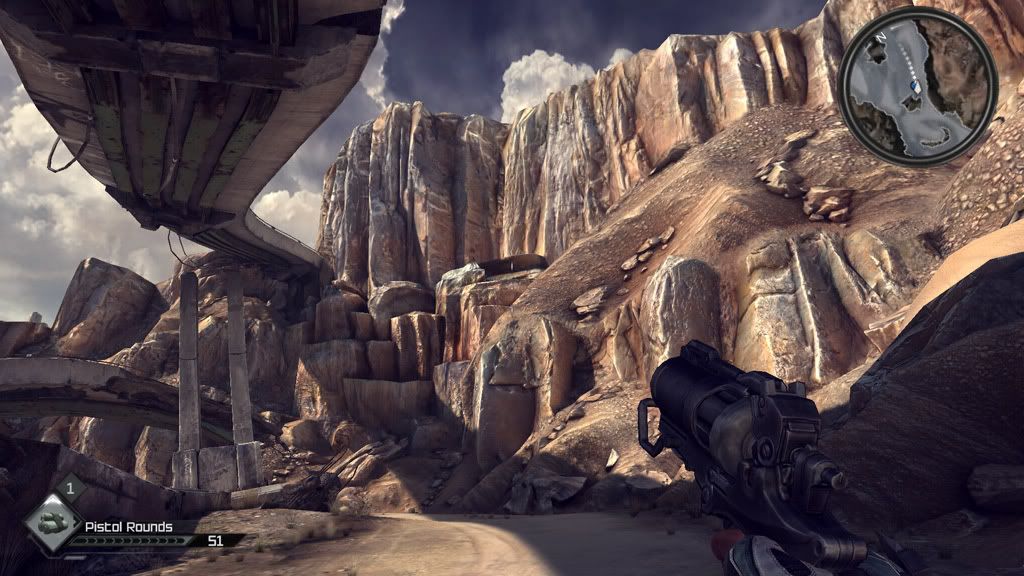
Rage © 2011 id Software LLC
With visual art that’s comparable to what artists can create with paint and canvas, who could say a game like Rage isn’t art? And the best part is this is only one aspect of the game! There are plenty more reasons why this game is art, but they'll have to wait for another blog post!
Subscribe to:
Posts (Atom)